Monday, February 24, 2014

Nokia's Android X range: Will this be madness or genius for Microsoft?

First it was Symbian. Then it was MeeGo. Then it was Windows Phone. Now it's Android. When it comes to smartphone operating systems, you can't accuse Nokia of being afraid to try new things.
Today at Mobile World Congress, Nokia announced the launch of three Android devices, the X, X+ and XL.
The trio will run on the Android Open Source Project (AOSP) version of Android – that's Android with all the Google service bits stripped out to you and me – with Microsoft services in their place and a new UI that features some of Nokia's old favourites in the form of a tiles (a nod to Windows Phone) and Fastlane (a la Asha).
Why? According to Stephen Elop, former Nokia CEO and soon-to-be Microsoft's head of devices, the X family is a gateway range – by giving users in emerging markets a bit of Android with a little Microsoft thrown in, the company is hoping those users will graduate up to Windows Phone later on down the line when they're properly hooked on smartphones.
Looking at the decision to launch the X range, it's not immediately apparent if the move is madness or genius.
Nokia's (and therefore shortly Microsoft's) traditional emerging markets lines have been struggling of late: while Nokia's non-smartphones are still selling in their tens of millions, sales have been starting to drop in the face of competition from sub-$100 Android devices.

The importance of apps

It looks like Nokia decided it couldn't beat them, so it might as well join them. According to Elop, launching devices on Android meant Nokia could take advantage of app ecosystem already build up around the OS.
But instead of taking Google's Android wholesale, Nokia has gone for its own forked version with lots of Microsoft elements on top.
As it's using AOSP rather than the Google Mobile Services version of Android, the X range won't feature any of the traditional Google services normally found on Android either — no Play, no Google Maps, no integrated Google search and so on.
That's both a blessing and a curse for the X range: the phones won't come with some of the elements that make Android so compelling, but it also gives Nokia and Microsoft a chance to replace them with its own equivalents, or those of its partners: there's Bing search integrated into Nokia's Xpress browser, OneDrive and Skype. There's Nokia's Here supplying the maps, for example, and there's Yandex to replace Play.
Nokia has also already got some of its own apps ready to download for the X range — think Facebook, Spotify, Skype — and they'll be linked to from the Nokia store that comes on the X devices.
Those are sensible ways to address the app question that will inexorably dog the range, but the broader question around developer support remains. While Elop promised Android developers could port their existing apps to the X range "in a matter of hours", I can't imagine too many will take him up on the offer of doing so for the sake of three phones with unknown numbers of users. After all, not too many have done so for Windows Phone, which has millions of users worldwide, and that lack of app ecosystem is still hampering the OS to this day.

The fight for growth markets

There's no question targeting emerging markets is a sensible strategy for Nokia-Microsoft, and taking on the cheap Android makers is absolutely a sound plan. But whether the X is the way to do that is unclear.
For users in emerging markets moving from a feature phone to their first smartphone, does OS really figure in the buying decision? Price and user experience are likely to be more important factors for choosing one handset over a competitor's.
According to Elop, the X range will serve as a way of introducing new users to Microsoft software before moving them up the stack onto Windows Phone devices, the company's real focus.
In releasing the X range, Nokia (and so Microsoft) may have got itself in a double bind: if the user experience with the X is good enough and the price is right, what impetus does the user have to migrate to Windows Phone? If on the other hand it's not ideal, why would that user want another product from that company?
To persuade users to gradually make the transition from Nokia feature phone devices to handsets running Windows Phone, Microsoft will bring out cheaper and cheaper Lumias, and sell the already rather reasonable X family — costing from €89 to €109 — at cheaper price points still.  
That means the price differential between the most expensive X and the cheapest Lumia isn't huge, nor is the gap between the cheapest X and the most expensive Asha. With common UI elements and apps across all the OSes, and no huge leaps in price from one to the other, it's hard to see what tools Microsoft will have at its disposal to persuade users to move from one OS to the other in future, once the Nokia acquisition is complete.
The X strategy feels a little like Nokia going back to the future: in adopting Windows Phone, it threw its own OS under the bus, hoping to make money and build loyalty putting its own software on top of someone else's operating system. Which, I can't help but think, does have parallels with what it is doing here.
And if the X range takes off, that gives Microsoft four OSes to support once the acquisition closes — Windows Phone, AOSP, Series 40 and its Asha OS offspring. Wasn't a profusion of OSes one of the reasons Nokia cited for adopting Windows Phone in the first place – having flirted with Symbian, MeeGo, Meltemi and Series 40 to address all price points, didn't Nokia find the we'll-be-all-OSes-to-all people idea unworkable?
Think back to the N9: Nokia's first and only device running MeeGo, the N9 was killed off to allow Nokia to focus on more established OSes rather than work to build support for a new, alternative operating system.
While it's tempting to see the X as the tail-end of Nokia as independent company, it makes far more sense to see it as the first steps for Microsoft as a device maker. As such, I wonder if the same fate awaits the X range. Many industry watchers say under Microsoft's aegis, the X range will be killed off. It's not that simple, however, as ZDNet's Mary Jo Foley points out: Microsoft may well decide to keep the X device line going, meaning the problems with the range aren't simply going to go away overnight.
I can't help but think Microsoft has the tools to be successful in emerging markets already at its disposal and may not need X going forward. If Asha, Windows Phone and ASOP X devices are getting closer in price, why not go all out on Windows Phone, take a hit on the price per licence in favour of locking users into the ecosystem for the long term?
Every time Microsoft asks users to make a move from one of its OSes to another, it gives a user pause to think whether to go for a new OS on Microsoft, or on someone else's platform. If it got on them on Windows Phone at the earliest opportunity, their upgrade path would be simpler, and there would be far fewer chances for them to leave for a rival's offerings.
Then, with Nokia's historical device-manufacturing expertise, it could use hardware elements as the means of getting users to trade up for more expensive devices. Hardware has been sorely lacking in innovation for some time now, meaning the time is ripe for it to be used as a differentiator once again. Take the 1020, for example: it generated a fair amount of buzz due to its market-beating camera. If anyone can make hardware interesting, it should be Nokia.
Mobile is hugely important to Microsoft and will only be more so in the future. Getting its OS strategy right is no small part of remaining relevant in a market that Google and Apple have claimed for themselves. If it continues to hedge its bets with the X range, Microsoft won't have learned the lessons that Nokia was forced to some years ago. And we all know how that worked out.

Saturday, February 22, 2014

HTC One KitKat update finally hitting T-Mobile and AT&T

We aren't far from HTC One owners on every major US carrier having access to Android 4.4.2 KitKat. T-Mobile's over-the-air update is rolling out now, and AT&T's will be out "soon," according to HTC's executive director of product managementMo Versi. As with its appearance on Verizon and Sprint, this update brings the latest version of the Sense UI (5.5) and all that that entails. Namely, a more customizable Blinkfeed and several appearance tweaks. The process is a littlebehind schedule, to be sure, but it's nice to see that carriers haven't slowed it down too much.

Jolla Promotes Community Growth With Android Launcher And Installable Sailfish OS

While Jolla has released their own handset, the main product is the mobile operating system, Sailfish OS. The Jolla handset gives the Finnish company a platform to show off the OS in an optimised environment, but  the 400 euro price-tag does raise a rather large financial barrier for the early adopter crowd. That’s why the news regarding produce for Android handsets, released ahead of Monday’s Mobile World Congress event, is intriguing.
By making the Sailfish OS available for free to install on other Android handsets, Jolla will be able to increase the user base and gain more feedback on the OS. Jolla already has a number of early adopters contributing to the code, and the addition of a downloadable and bootable version of the OS will bring in more power-users looking for something different.
It’s a similar strategy to Cyanogen Mod - leverage the existing Android hardware to your own OS and expand the number of instances in use to gather test data and the visibility of the new platform.
Jolla screenshots
Jolla screenshots (image: Ewan Spence)
Jolla is taking this one step further with the release of an Android launcher. Taking advantage of the open nature of Android, Jolla’s take on a mobile user interface will be ported as an Android app for anyone to download and experience the Finnish implementation of a mobile UI on top of a native Android handset. Given Sailfish OS can support the running of Android apps on native hardware, anyone comfortable in the launcher’s UI should feel more comfortable when considering a Sailfish OS powered handset in the future. From the press release:
The Sailfish community has already ported Sailfish OS into several devices including major versions of popular Samsung Galaxy, Google Nexus, and Sony Xperia. Also, porting for highly popular Chinese Xiaomi products is under work in community projects. In addition, Jolla is releasing its own Sailfish user interface launcher as an Android application, which can be used to simulate the Sailfish OS experience on Android devices. The app will be available for download in the near future from Jolla.com and from common Android market places.
Jolla is a very small company (with 150 or so staff) and that means resources such as developer hours are precious and need to be used effectively. The community that has built up around this Finnish company is a vital part of a strategy to improve the operating system, evangelise their vision, and promote the platform. Providing the OS as an alternative for Android hackers, and a ‘safe to use’ replacement UI for power-users, allows Jolla to talk to the existing Android base about the plans for mobile computing over the next few years.
It’s likely the some of them will consider a Sailfish OS device when their mobile contracts come up for renewal, and no doubt many of them will provide feedback to Jolla on the OS and the UI. That lowers the user acquisition cost for Jolla and provides more data points from testing. When you are starting from a small user base, keeping these costs low is one of the keys to managing the limited funds available.
At each step of the process, Jolla continue to delight me with a user-focused approach to improving their open operating system. They are increasing the reach of the platform and who can be involved, improving the capability of the OS and making a smarter mobile OS step by step.

The Android launcher and Sailfish OS distribution for the compatible handsets will be released during the first half of 2014.

Flappy, flying or splashy - game clones ride high

LOS ANGELES - The Splashy Fish has been dethroned by a Flying Cyrus.

Ever since Flappy Bird was yanked from app stores by its creator, clones have multiplied. A "Splashy Fish" was No. 1 for two weeks on Apple's chart. (Google Play doesn't break out the top 10.)

This week, a Miley Cyrus meets Flappy Bird parody - Flying Cyrus- Wrecking Ball - is No. 1 on the iTunes free app chart.

The game is simple. It follows the same pattern as Flappy Bird. You use the home button to move the object across the screen without hitting anything, except this time, it's teen star Miley Cyrus with her tongue extended - something she is known to do in public performances.

But since imitation is the sincerest form of flattery in app land, a parody of the parody with a deceptively similar name is also topping the charts.

Flappy Miley Wrecking Ball Pro, from Storm Factory, is No. 9. There is a free version; or you can pay 99 cents for an ad-free one.

Flappy Miley follows the same formula - use the home button to move her across the land - but it's a different image.

Meanwhile, Splashy Fish is still a strong No. 2 on the iTunes chart, giving app fans their closest replica of the Flappy Bird experience.

"It's a lot more fun," says Splashy Fish fan Austin Ervin of Los Angeles. "There are a lot more colors."

Ervin's girlfriend Karissa Ortiz says the game is addicting. "I swore I'd never play it, but my boyfriend got me into it, and I've been playing it ever since."

BlackBerry Messenger gets sticker support and new BBM shop


Blackberry on Friday announced new features to its popular instant messaging service BBM.
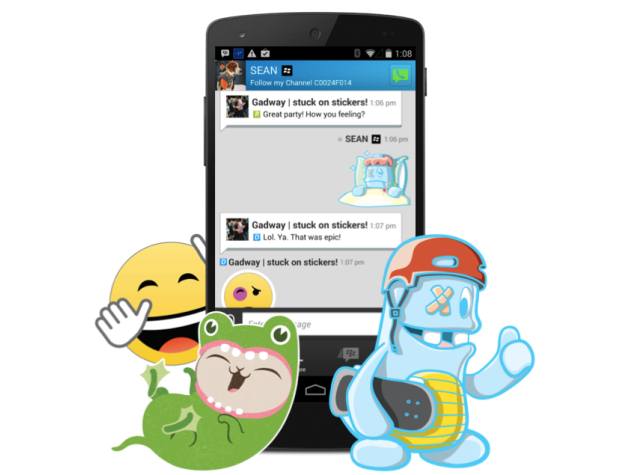
The company has added stickers to the BBM service, like other instant messaging apps, as well as a new BBM shop. Both the services are in beta form right now.
"We're focused on making your BBM chats more fun with the addition of stickers, available in the new BBM Shop!"
The company says that many of users 'favourite' emoticons will also be available in a free BBM sticker pack. But other than that, new stickers can be purchased and then downloaded through the new BBM shop where they are available in different packs. Each sticker pack contains 20-25 stickers relating to a theme or a character like CosCat, Gilbert's Tales, Bubble Bot and more. Some of the stickers will include popular characters from television shows or movies.
"Unlike emoticons, stickers are bolder, more beautiful images that you can add right in to your chat."
Recently on Wednesday, the company now rolled out the cross-platform messaging app to Android 2.3 Gingerbread running smartphones. The popular BBM app was earlier only available for devices running Android 4.0 Ice Cream Sandwich or higher.
Earlier the company updated its messaging service to BBM 2.0 to bring Channels and Voice support to Android and iPhone.
BBM Voice lets the user make free internet calls to other BBM users using either Wi-Fi or the phone's data connection. BBM Channels includes a wide array of topics like products, hobbies, sports, entertainment, fashion, cars and others. The channels can be even created by BBM users based on the common interest of the community.

Microsoft chops Windows 8 price for low-end device makers: Report

There has been talk that Microsoft was considering chopping the price it charges OEMs for Windows, and now, according to a February 21 Bloomberg News report, Microsoft is making that move -- at least for low-end devices.
asuslaptop249
Bloomberg, citing unnamed sources, said Microsoft is dropping the price it is charging OEMs for Windows 8 from $50 a copy to $15 a copy. The price cut seemingly only applies to machines that are priced at $250 or less at retail. It's not clear from the report when this pricing change will take effect.
There aren't a whole lot of Windows 8 PCs or tablets that cost $250 or less right now -- at least here in the U.S. Perusing the online Microsoft Store, I only found one: The ASUS X102BA-BH41T Touchscreen Laptop, which has been discounted to $249 from its original price of $399. On Amazon.com, the 8-inch Dell Venue 8 Pro 32 GB tablet is listed at $249, also discounted from its original $299. That said, the low end of the consumer market is where Microsoft is most vulnerable to competition from Android and Chrome OS-based devices.
Microsoft is expected to overhaul its Windows SKUs by the spring of 2015, which is its target release date for the next major version of Windows, codenamed "Threshold" (and likely to be labeled Windows 9 at launch). According to my sources, Microsoft is planning to make three primary Windows Threshold SKUs available: A low end "modern" consumer SKU for Windows Phones, ARM-based Windows tablets/PCs, phablets and other kinds of tablets; a more traditional consumer SKU that would likely run legacy Win32 apps; and a traditional enterprise SKU for business users that would support legacy Win32 apps and be updated less frequently than the other two.
I'd think it would be devices in "modern" SKU territory that would be Microsoft's target for a cheaper OEM version of Windows. The Verge previously reported that Microsoft might go so far as to make this SKU free to PC/tablet/phone OEMs.
Microsoft has been criticized by PC makers for decades for its OEM Windows pricing. In the past, Microsoft has charged OEMs more than $100 a piece for Windows, but provided PC makers ways to reduce that cost via marketing agreement concessions. OEMs who agreed to preload Windows on at least half of their PCs each month; to display the Windows logo prominently; and/or to promote Windows in their press releases got discounts. Volume also mattered (and to a large extent, still does), with PC makers moving the largest number of Windows machines granted a tier-one rate. Many of these practices got Microsoft in legal hot water -- see U.S. DOJ vs. Microsoft -- and resulted in Microsoft leveling the OEM playing field around pricing to a large extent.
I wouldn't be surprised if Microsoft plans to and/or has already started cutting Windows OEM pricing for low-end devices, as Microsoft's OEM revenues from Windows on cheaper consumer PCs and tablets has been on the decline. (Its share on more expensive business PCs has held up better, as company officials have noted during recent earnings call reports.)
The part of this equation in which I'm most interested is how the Softies plan to make up for reduced operating system licensing revenues.
Patent-licensing is one place where Microsoft is counting on increased, sustainable revenues. Microsoft is believed to be earning in excess of $1 billion a year from its growing number of patent agreements with companies making Android and Chrome OS devices. I'd think Microsoft also will be looking to service-subscription sales from users for Office on iPhones, Macs, Android phones and -- if my sources are right -- the iPad, as another offsetting revenue source.
Anyone else see other places Microsoft might try to exact more money from OEMs and/or consumers to take up the OS licensing slack?