Hearthstone: Heroes of Warcraft iPad soft launches in Canada, Australia and New Zealand. Previously a PC game, this brings Blizzard’s card battling experience to tablets.
Hearthstone is a collectible card game with turn-based mechanics. Online player vs. player challenges are between two opponents, and require a Blizzard’s Battle.net account. There are a number of game modes, with different play styles to choose from.
You start the game with a collection of cards, and aim to earn rarer cards through purchasing additional packs (or as reward for progress). Players can also disenchant unwanted cards in exchange for arcane dust — that can be used to create new cards.
The card packs are purchased an in-game currency that is awarded for completing randomized daily quests and winning matches, or by using real money in the in-game store. Here lies the business model.
You can duel as a Mage (Jaina Proudmoore), Priest (Anduin Wrynn), Warlock (Gul’dan), Paladin (Uther the Lightbringer), Warrior (Garrosh Hellscream), Druid (Malfurion Stormrage), Hunter (Rexxar), Rogue (Valeera Sanguinar), and Shaman (Thrall).
Although Hearthstone: Heroes of Warcraft is not yet available in the US on tablet devices I hope you enjoyed this close look video on what the game has to offer when it arrives.
Samsung Galaxy Ace Style is yet to be officially announced, but the company has jumped the gun and has showcased its latest Galaxy Ace device in Hamburg, Germany. The design language of the newest mid-range offering remain identical to other Galaxy devices in the same price bracket. The Samsung Galaxy Ace Style has a unique distinction of being among the first affordable smartphones to run on the latest Android 4.4 KitKat OS. The device is said to feature a 4-inch WVGA display, 5 megapixel rear camera, VGA front-facing shooter and 4 GB of internal storage. The details regarding the other hardware specs are scarce at the moment. Samsung Galaxy Ace Style will be up for grabs in both single and dual-SIM variants and the device is rumored to be priced around €200-€300 (about $275-$410) in the European region. We will know more about the Galaxy Ace Style when the smartphone goes...
from GSMArena.com - Latest articles http://ift.tt/1h8asjP
We were expecting Samsung to decorate its Galaxy S5 smartphone with the usual spin-offs like the Active, mini and Zoom. What we didn't expect was for Samsung to shift to a whole new naming scheme but according to a new leak the Galaxy S5 Zoom will be called the Galaxy K Zoom. And to solidify that he know what he's talking about the source has a photo of the actual Samsung Galaxy K Zoom's back revealing some more interesting details - the lens, flash and some of the design. Samsung Galaxy K Zoom Just as previously reported the zoom lens really doesn't protrude from the back panel when not in use, which should help loads with using the device as a phone. There's also a Xenon flash and the leather-like texture on the back, which is a nice step up from the unimaginative and rather smudgy gloss of old. The inscription on the lens also confirms the 10x zoom covering the 24-240mm range in 35mm equivalent. There's much else but the source does stick to the 20 MP resolution. The rest includes a 4.8" 720p display, Android KitKat with Samsung's TouchWiz UI. We're also expecting either a quad-core 1.6 GHz chip or the new Exynos hexa-core with two Cortex-A15 and four Cortex-A7...
from GSMArena.com - Latest articles http://ift.tt/1hEJbnN
Yahoo has added more layers of security in its effort to shield people's online lives from government spying and other snooping.
The new measures include the completion of a system that encrypts all information being transmitted from one Yahoo data centre to another. The technology is designed to make the emails and other digital information flowing through data centres indecipherable to outsiders.
Search requests made from Yahoo's home page are also now automatically encrypted, and the Sunnyvale, California, company is promising to make it more difficult for unauthorised intruders to hack into other services, including video chats, within the next few months. Yahoo strengthened the security of its email in January.
"Whether or not our users understand it, I feel it's our responsibility to keep them safe," Alex Stamos, Yahoo's recently hired chief information of security, told a small group of reporters.
Stamos, a former security consultant, joined Yahoo less than a month ago as part of the company's anti-snooping crusade.
Yahoo and other major technology companies such as Google and Microsoft have made online security a top priority during the last 10 months amid a series of revelations about US government programs that have vacuumed up personal information about millions of Web surfers in an effort to thwart terrorism. The wide-ranging surveillance has been outlined in documents leaked to the media by former National Security Agency contractor Edward Snowden.
The technology industry's indignant response has been driven by financial self-interest as well as an aversion to government prying. Most Internet services make money from ads that could be more difficult to sell if spying fears cause their audiences to shrink.
Yahoo, which has more than 800 million worldwide users, vowed late last year to encrypt its data centres by March 31 after reports that the US government had been secretly infiltrating the lines that transfer information overseas.
Yahoo still lags behind Google's encryption efforts. In an interview Wednesday, Stamos said Yahoo hasn't been able to move as fast as it wants because many of its services rely on content and ads provided by thousands of other companies, including some that aren't convinced that they need to encrypt.
For that reason, Yahoo's widely used news, sports and finance sections still aren't automatically encrypted. Visitors to those services can trigger an encrypted service by typing in "https" before the website's address. Yahoo is confident that it will be able to persuade its content and advertising partners to take the steps needed to enable automatic encryption of those services later this year.
"Some partners already understand this is the way the wind is blowing," Stamos said. "We are moving to a world where all content is encrypted all the time."
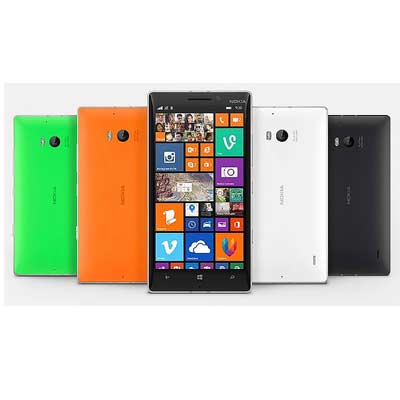
Nokia has reportedly unveiled its latest phone in Lumia series, which will be a new flagship smartphone running Windows Phone 8.1.
The Lumia 930 reportedly features a 5-inch screen with 1080p display housed inside a rectangular body with metallic sides and a colored back, either in orange, green, white or black.
According to The Verge, Microsoft's upcoming device chief Stephen Elop said that the 930 is just a 'beautifully crafted device', while introducing the phone.
The flagship Lumia device reportedly features a 20-megapixel PureView camera with a Carl Zeiss lens, supports wireless charging and has a Snapdragon 800 processor.
Elop said that the Lumia 930 offers unprecedented images and videos.
The Lumia 960, which bears a strong resemblance to the Lumia Icon introduced for Verizon earlier this year, will be released globally, beginning in Europe, Asia, the Middle East and India this June and cost 599-dollars before taxes and subsidies, the report added.
That’s what I took away from Amazon’s introduction of the Fire TV. Not that I think that the retail giant’s set-top box is leaps and bounds ahead of what Apple—or Roku, or Google—are offering, but it’s pretty close to the device that Apple’s been shipping for the last few years. If there’s a time for Apple to release something that’s going to keep it (at least) one step ahead of its competitor, now is it.
Find and seek
Fire TV doesn’t necessarily boast the same breadth of content as Roku or the Apple TV, but it is stabbing directly at the weakest point of many of its competitors: discoverability. There’s a lot of digital video content out there right now, andnobody’s yet figured out how to make it easy to find out where that content is. Instead we wade through countless menus and sub-menus of services, shows, episodes, movies, and so on, tapping out search terms on our little, antiquated five-direction controllers.
If they work as expected, then Fire TV’s voice-search capabilities may one-up both the Apple TV and Roku. Offering the feature specifically for search helps get around the problem most users have with a voice interface—namely how you deal with ambient noise, especially the noise generated by the very content you’re watching.
Of course, rumors have long suggested that Apple too might jump into this arena by adding Siri to the Apple TV. For my part, I think it would be great if Siri on my iPad or iPhone were aware of my Apple TV, enhancing it in much the same way that Apple’s own Remote app lets you take control of the set-top box. But a built-in microphone on the physical remote would probably be more attractive to those without iOS devices.
It’s surprising to me that Apple hasn’t yet found a way to incorporate Siri into the Apple TV, but I have to believe that’s because either it hasn’t yet determined the right way to do it or because it hasn’t quite managed to shake itself out of the mindset that the Apple TV is a hobby.
The game’s afoot
The other major chunk of Amazon’s announcement was focused on gaming—which,coincidentally, is also a subject of longstanding scrutiny when it comes to the Apple TV. While this certainly represents Amazon taking a shot at Apple, whose mobile devices have become a major gaming platform, there’s also plenty of splash damage for Microsoft and Sony’s gaming consoles, as evidenced by Amazon’s $40 game controller.
“Many people don’t have game consoles—they don’t have them because they can’t afford them or they don’t want to pay for them,” Amazon’s Peter Larsen said during the press event. “These customers now have to go to their smartphone or tablet and play games there.”
As with Siri, games are a place where Apple has held a lead over Amazon, and yet has chosen, thus far, not to focus on bringing those capabilities to its set-top box. Then again, Apple’s success at gaming on iOS has come to seem more and more like an accident rather than a savvy business move—the company never expressed much interest in the market on the Mac. The attempts Apple has made to bolster gaming have often seemed half-hearted—Game Center, for one and, more recently, support for game controllers on iOS. The latter has barely caught on so far; initial reviews have been lackluster, at best. In fact much of the success of gaming on iOS often seems to have been accomplished in spite of Apple’s own efforts rather than because of them.
Boxing match
This is Amazon’s first-generation set-top box, and as such it can reap the benefits of having seen where Apple, Roku, and Google have succeeded and failed over the last several years. So it’s not surprising that the device that was announced this week is on par with the current state of the art—it would have been far more surprising had it lagged significantly behind.
Again, that’s not to say that Amazon’s offering is superior, right out of the gate. It has its advantages (among them, that Amazon can bring its own streaming service, with a recurring monthly subscription, to the party) as well as its disadvantages (it can’t yet match all the content Apple offers, nor does it seem to have any feature as singularly compelling as AirPlay).
But for all the noises the company has made about the Apple TV being an area of“intense interest,” Apple has yet to really put its money where its mouth is, and show us what’s so interesting about it.
From what we’ve seen of Amazon, it’s a company that doesn’t mind throwing out an early version of a product that’s good, if imperfect, and then quickly iterating upon it—just look at all the changes the Kindle has gone through in the past seven years.
Apple, on the other hand, also follows the iterate model, but it likes to roll out devices that feel complete right from the get-go—see the iPod and iPhone—and then improve them as the state of technology improves.
With Amazon’s entrance, most of the major tech companies now have a foothold in the living room. Over the past decade, we’ve seen plenty of skirmishes and forays into this market, but it’s not hard to see that the battle is finally beginning in earnest.
Times have changed -- but have they changed that much?
Yes, there were slick demos at Build that showed how a program's core logic could be moved to a shared library, with platform-specific code tucked into suitable cubbyholes. Changes made to the interface on one platform -- Windows Phone -- made the app run better on that platform. Changes to the shared library rippled onto all platforms. A simple, quick recompile produced tailored code for each platform.
No doubt you're skeptical about demos. (Did you see the Build "demo" of the Windows 9 Start menu? I'm told it was faked, from beginning to end.) Plus, massive changes to a program that take place with a few clicks are highly suspect. But this time, I think there may be some walk to the Softie talk.
Why? Because the guy who's leading the charge this time around -- Myerson -- was on the receiving end of the bull two years ago. Back then, then-Windows chief Steven Sinofsky was trying to convince the world that his vision of the Windows RT API would scale from phones to servers. He just, uh, forgot to ask the guys working on Windows Phone. (He also pushed the Metro interface on Windows Server, to prove his point, but I digress.)
As I said two years ago:
The WinRT in Windows 8 is only vaguely similar to the "WinRT" in Windows Phone 8. I don't know how Microsoft dares to call the Windows Phone 8 API "WinRT." It's a bit like calling the operating system in a server "Windows 8" and the operating system in a telephone "Windows 8" as well -- and implying that the two are somehow scalable or even comparable. You'd have to enter a reality distortion field to believe a whopper like that.
This time, Myerson knows the server side. He knows the phone side. And heaven knows he's struggled with Windows, as have we all.
It's still much too early to know how much "API parity" Windows 9 will bring and how well the cross-platform tools will work. But if Microsoft manages to put Metro apps inside floating desktop boxes (à la ModernMix), sticks an abbreviated Metro Start screen next to the Windows 9 Start menu (as in that faked demo), and pulls the Store together so it dishes out apps that will work on any Microsoft platform, there will be very strong incentive for developers (developers, developers) to take a renewed interest in Windows.